




There’s a growing problem inside most go-to-market teams that almost no one talks about directly, but once you see it clearly, it explains a lot — why deals slow down, why experienced team members burn out, and why “just one quick question” is almost never quick.
This problem shows up quietly, day after day, in deal cycles, internal Slack threads, and customer conversations. Most teams experience it constantly, but very few name it, and even fewer fix it.
It’s what we call the internal knowledge problem.
Knowledge Everywhere — and Nowhere
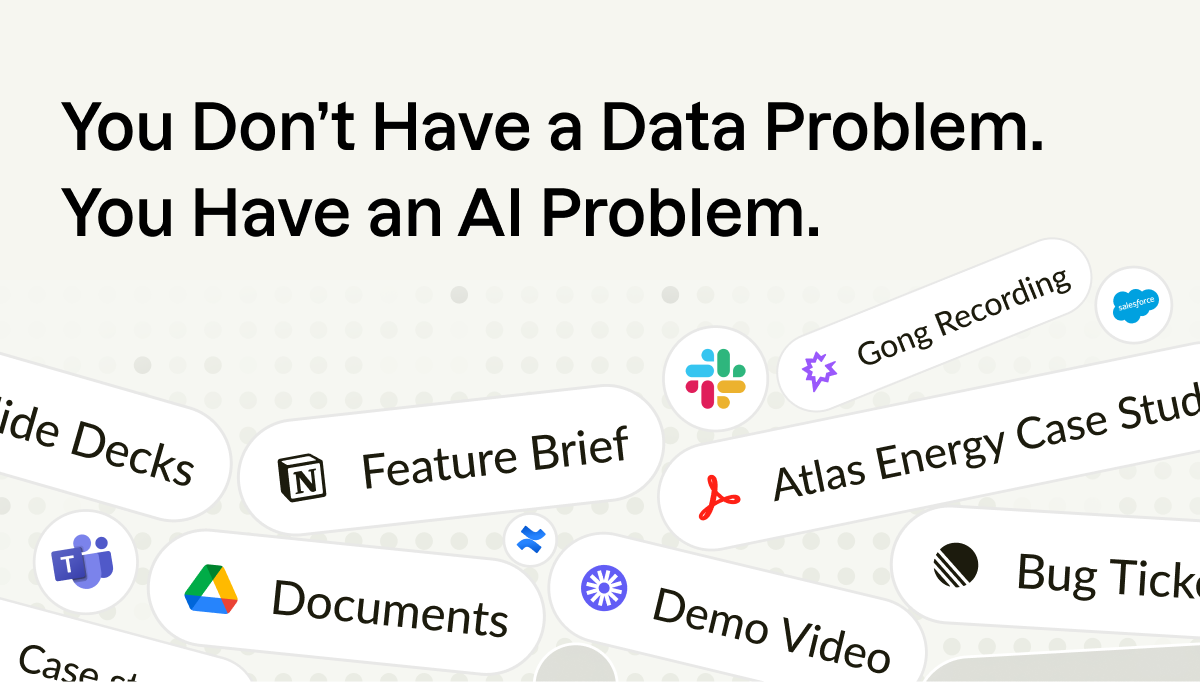
In most GTM organizations, critical product, technical, and process knowledge technically exists, but it’s fragmented across so many places that it’s effectively unavailable when it matters most.
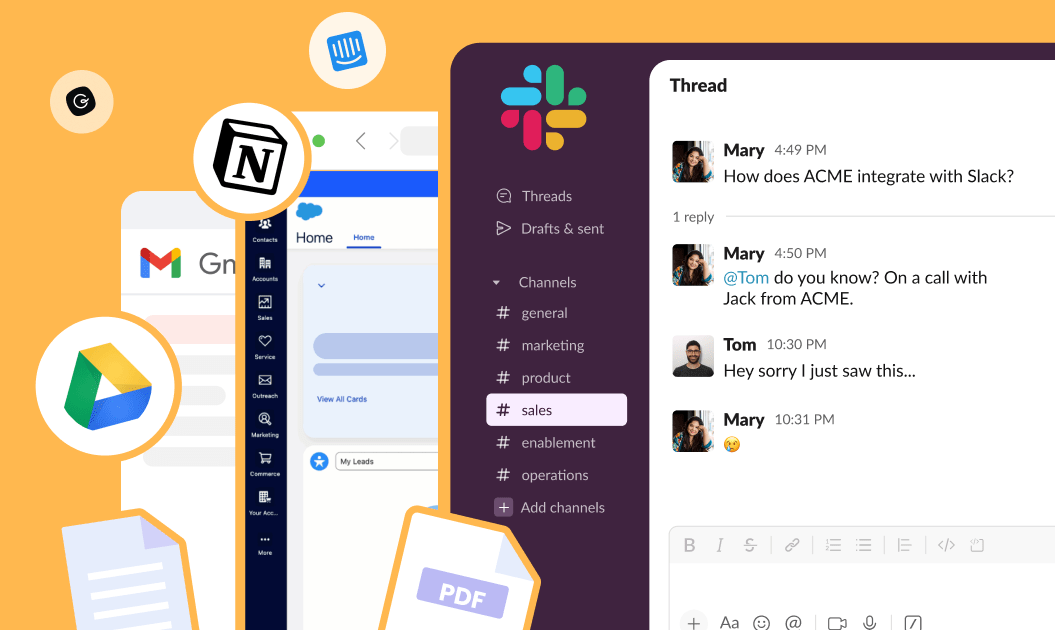
Some of it lives in Confluence pages that may or may not be current. Some of it is buried in Jira tickets written for engineers, not sellers. Some of it exists in Slack threads from months ago, HubSpot notes, Notion docs, spreadsheets, or shared folders no one fully trusts. And a meaningful amount of it lives only in the heads of a few long-tenured employees who “just know how things work.”
None of this is intentional. It’s the natural result of fast-moving teams adding tools, shipping product, onboarding new hires, and solving problems in the moment without a system designed to preserve answers over time.
The problem is that revenue teams don’t need knowledge eventually. They need it in real time, often while a prospect or customer is waiting on the other end of a call.
What Actually Happens When Answers Are Needed
When someone on your revenue team needs an answer in the moment, typically during a live deal, one of two things happens, and neither is good for the business.
In the first scenario, they spend 30 minutes to an hour digging across tools, opening tabs, searching Slack, scanning docs, and trying to piece together an answer they’re still not fully confident is correct or up-to-date. Even when they find something, there’s lingering doubt: Is this still accurate? Did this change recently? Can I share this information with a client?
In the second scenario, they message an internal subject-matter expert, often a senior sales engineer, product leader, or long-time employee, and ask for help. That person is already answering dozens of similar questions, has to context-switch yet again, and re-answer something that’s already been documented somewhere.
One Mash customer described it this problem.
“I’ve spent 15–20 hours this week responding to questions from the AE team and customers. The majority of these already had documentation or had been answered somewhere in Slack.”
Aaron Dolan, Head of Solutions Engineering, Triple Whale
In both scenarios, the outcome for the prospect or customer is the same: “Let me get back to you.”
That delay might seem small, but it compounds quickly; slowing deal cycles, reducing confidence, and negatively impacting customer experience.
The Hidden Tax on Your Best People
Maybe you recognize this problem because it’s your daily workflow. Maybe you’re the person constantly digging for answers. Or maybe you’re the one everyone pings when they need the “real” answer. Or you may even be the revenue leader watching deals stall while your team waits for confirmation that the information they found is actually correct (and you’re trying to hit your quarterly goals.)
Either way, this is a tax on the entire organization.
It steals time from revenue teams. It burns out your most knowledgeable people. And it scales poorly as your company grows.
As teams expand, products become more complex, and markets evolve faster, the internal knowledge problem doesn’t stay flat, it accelerates. And as time goes on, it continues to grow into a larger burden that is too daunting for most teams to tackle.
Why Fixing This Matters More Than Ever
For many teams, speed is the competitive advantage. But speed isn’t just about sales tactics or enablement content, it’s about whether the right answers are available when they’re needed.
As Allan Levine, VP of Revenue & Growth at Nevvon, put it:
“Our industry is extremely complex and constantly evolving, and we needed a solution that would capture the nuance that exists from state to state. Mash helps ensure that our GTM team can confidently deliver these answers to customers, faster.”
Confidence, consistency, and speed all depend on the same thing: accessible, trustworthy internal knowledge.
Why We Built Mash
This problem is exactly why we built Mash.
Mash centralizes your internal knowledge, connects to the tools you already use, and gives revenue teams instant, trustworthy answers in the moment they need them — without digging, guessing, or interrupting the same experts over and over again.
Instead of answers disappearing into Slack threads or living only in someone’s head, Mash captures them once and makes them available wherever revenue teams work.
Kerry Sokalsky, CEO of Tech Sales Mastery, summarized the difference this way:
“We’ve seen dozens of tools built to help sellers move faster, but Mash is the first platform that actually connects product mastery with sales execution. It allows reps to deliver high-fidelity technical answers in real time — something that traditionally required heavy reliance on senior SEs or hours of digging.”
The goal isn’t to replace people or documentation. It’s to make sure that when something is answered correctly once, it stays accessible, consistent, and useful for everyone who comes after.
Moving Faster Starts Internally
Modern GTM teams talk a lot about alignment, efficiency, and speed, but none of those are possible when internal knowledge doesn’t scale.
Fixing the internal knowledge problem won’t just save your revenue team time, it has a ripple effect that greatly impacts the success of a company, shortening deal cycles, reducing burnout, improving customer experience, and freeing your best people to focus on the strategic work they were actually hired to do.
About Mash
Mash is the Slack-native knowledge agent platform that helps complex & multi-product revenue teams get the information they need, when & where they need it – take the next actions from creating a feature request to escalating an issue to the internal expert – without even asking. Designed for technical & complex products, Mash’s platform automates answers, getting contextually relevant information, and managing complex organization workflows. They are the foundation for bringing client, technical, product and tribal knowledge to the entire organization.
If you’re interested in learning more about how we’re tackling this problem, and how leading revenue teams are moving faster by using Mash, connect with us at the link below.